Grid Delays Are a Filter, Not a Fate: A UK Developer’s Guide to Connectable-by-Design Projects
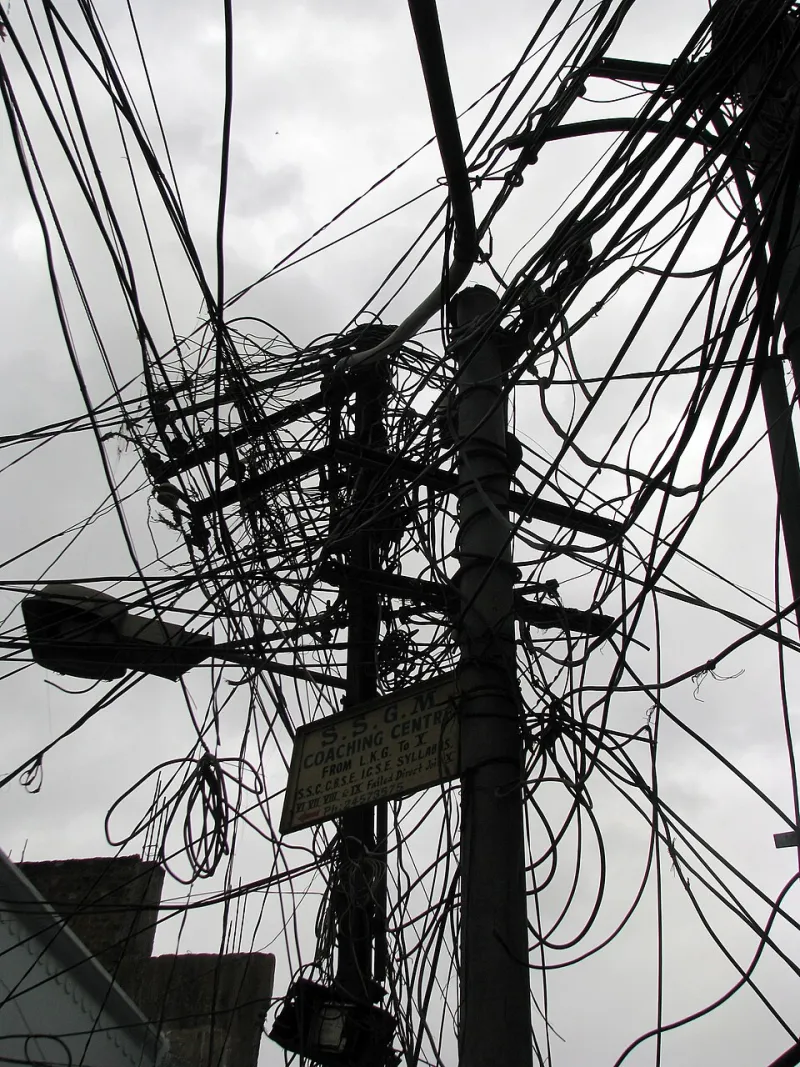
Photo: McKay Savage from London, UK, CC BY 2.0, via Wikimedia Commons
The UK grid queue has become a familiar boardroom grievance. Developers point to long connection dates, uncertain reinforcement costs and a queue that seems to reward speculation as much as delivery. The complaint is understandable. It is also incomplete. In 2026, the more useful question is not how quickly a project can join the queue, but whether it deserves to be there at all. Connection delay is a filter. Used properly, it exposes projects that depend on unrealistic assumptions about power, land, community consent and customer demand.
The queue as a strategic screen
A grid connection is not a administrative formality. It is a signal of system need, locational value and engineering feasibility. Projects that can connect earlier tend to share certain characteristics: they are sized to available capacity, they co-locate generation and demand, they use storage to manage peaks, and they stage their load rather than demanding a single large connection from day one. Projects that struggle often assume the network will bend to their preferred design.
This is not an argument for accepting every delay. It is an argument for using delay as diligence. If a resource project cannot explain why its connection date is realistic, which reinforcements it depends on, and how it would operate if those reinforcements slip, the business case is weaker than the headline capacity suggests.
A connectable-by-design checklist
Co-location
Co-locating generation, processing or industrial demand can reduce reliance on long-distance network capacity. For mining and energy developers, the question is whether on-site or nearby generation can serve a meaningful share of load without creating new constraints. Co-location is not a panacea; it can raise emissions, land-use and permitting issues. But it forces a more honest conversation about energy architecture.
Storage
Battery storage can improve connection viability by shifting demand and providing flexibility. For industrial loads, storage may be modest and behind the meter; for generation projects, it may be central to the revenue model. Investors should test whether storage is technically integrated, commercially contracted and safely permitted, rather than appended to a project as a queue-management tactic.
Phased load
A project that can start with a smaller connection and expand in stages is often more financeable than one that requires full capacity before first revenue. Phased load can align with construction timetables, customer ramp-up and network reinforcement. It can also reduce the risk of paying for capacity that is not yet used.
Community benefits
Grid infrastructure and resource projects both depend on local consent. Community benefit arrangements should be proportionate, transparent and linked to actual impacts. A developer that treats community engagement as a queue strategy rather than a long-term operating commitment will find that social licence is harder to secure than a connection date.
Investor disclosure
Boards should disclose connection status, key assumptions and sensitivity to delay. Investors need to know whether a project is connected, has a accepted connection offer, depends on a queue reform process or is merely awaiting a response. Vague language about grid readiness is a red flag.
Aligning with net zero and industrial strategy
The UK's net-zero and industrial strategy objectives are not decorative. They shape which projects are likely to receive policy support, public funding and customer interest. A critical-minerals refinery that can demonstrate low-carbon power, efficient water use and skilled local employment is better placed than one that cannot. An energy project that supports industrial clusters, flexibility or system resilience has a clearer strategic rationale than a standalone scheme with no system benefit.
But alignment should not be confused with entitlement. Policy support does not remove commodity risk, construction risk or offtake risk. The strongest projects use strategic alignment to strengthen commercial fundamentals, not to replace them.
What business readers should judge
A practical test is to ask whether a project would still make sense if the connection arrived two years later than promised. If the answer is no, the project is not robust. If the answer is yes, the delay is painful but not fatal. Investors should also ask whether the project can operate in a constrained system, whether it has contracted flexibility, and whether its power costs are hedged or exposed.
The contrarian conclusion is simple: the UK grid queue is revealing. It separates projects designed for the system from projects designed for a spreadsheet. Developers who treat connection as an engineering and commercial discipline, rather than a lobbying complaint, will be better placed to secure capital and deliver. In 2026, the most credible resource projects will be connectable by design, not merely queue-positioned by ambition.