Ash to Assets: The Quiet Race to Mine Britain's Waste-to-Energy Residue
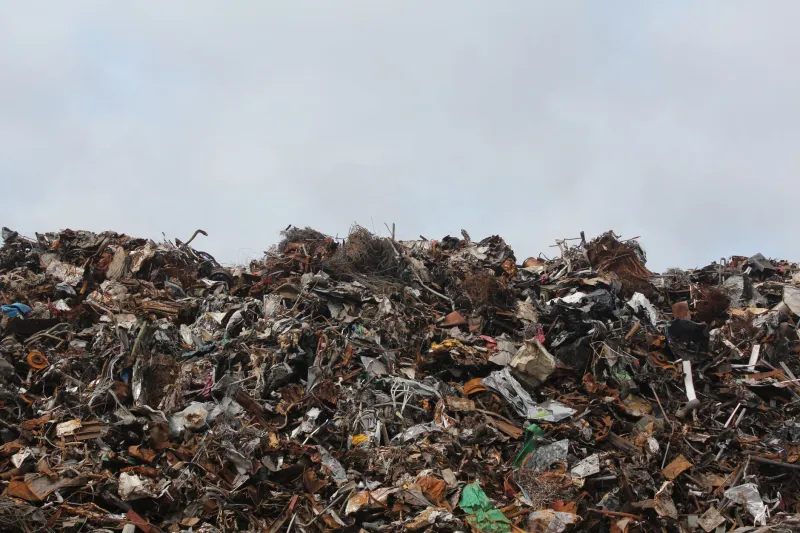
Britain has spent the better part of two decades building a fleet of energy-from-waste (EfW) plants to deal with what landfill could no longer absorb. It has spent considerably less time interrogating what comes out of the other end.
The residue — incinerator bottom ash, or IBA — is conventionally quenched, screened and sold as an aggregate for road sub-base, pipe bedding and block manufacture, with ferrous and non-ferrous metals pulled out along the way. That description now understates the commercial reality. Rising landfill tax, tightening aggregate specifications and a genuine squeeze on primary mineral supply have combined to make IBA one of the few mineral streams in the UK whose grade is determined by people who already control the feedstock.
The economics were never about the metal alone
A standalone metals-from-ash plant would struggle. The reason IBA recovery works is that combustion has already paid for the comminution. The EfW operator has been paid a gate fee to take the waste and has burned it for electricity; the ash arrives at the processing circuit as a by-product with a cost of extraction far below anything a greenfield mine could offer.
That subsidy-like structure cuts both ways. It means ash processors can tolerate lower grades and more variable feed than a conventional concentrator, but it also means their margins are hostage to two markets at once. When standard-rate landfill tax sits above £120 a tonne, sending untreated ash to hole-in-the-ground disposal is an expensive admission of failure — and operators with long-term disposal contracts are now re-examining them with a different set of assumptions.
What the ash actually contains
The non-ferrous fraction is dominated by aluminium, with copper, zinc, lead, stainless steel and trace precious metals appearing in smaller quantities. Most of the value sits in sizes above a few millimetres, which is why eddy-current separation and density-based circuits have become standard in the newer plants. The difficulty lies in the fines: a wet, chloridic, glassy material that carries a disproportionate share of zinc and lead, fouls downstream equipment and is the part of the flow sheet most likely to end up back in landfill.
It is worth separating bottom ash from air pollution control residues, because the two are frequently conflated in investment commentary. The latter is a hazardous waste stream with a very different handling and disposal route; the former is where the recoverable metals story sits.
Beyond the base metals, the trace critical-minerals question is more nuanced than some marketing material suggests. Concentrations of technology metals in bottom ash are typically low and highly variable between plants and between seasons, reflecting what households and businesses actually threw away. A plant processing commercial and industrial waste will produce a different assay from one serving a dense urban kerbside round. That variability is the single biggest engineering constraint on any processing circuit designed around a fixed specification.
The permit is the project
For all the metallurgical interest, the binding constraint is regulatory. Treating IBA as a resource rather than a waste requires an environmental permit that reflects the actual operation, and the classification of the residues — including where material ceases to be waste — remains a live question for anyone selling the mineral fraction into construction markets.
The UK's departure from the EU has not simplified matters. End-of-waste positions that were once read across from Brussels now rest on domestic regulator guidance and case-by-case assessment, and a buyer of recycled aggregate will ask for evidence that the material is not waste before it accepts a load. For a processor, that means sampling regimes, testing costs and documentation obligations that must be priced into the model from the outset rather than bolted on after commissioning.
Add to that the planning position. Ash processing plants sited next to an EfW facility avoid road movements of a heavy, low-value material, but co-location brings its own consenting complexities and depends on land the EfW operator may already have earmarked.
Offtake is a specification problem, not a demand problem
The secondary aluminium sector is not short of appetite; it is short of clean, dry, correctly sized feedstock with a predictable composition. The same is true further downstream, where copper and zinc units want a concentrate they can blend rather than a mixed product they must re-sort.
This is where the gap between a good pilot plant and a bankable project usually opens. A recovery rate quoted in a feasibility study is meaningless without the associated product specification and the discount the offtaker will apply for moisture, chlorine or fines. Investors should treat an offtake letter of intent that does not specify penalty clauses as a marketing document.
Why waste companies and junior miners are converging
Waste operators hold the feedstock, the permits and the site — but rarely the mineral processing expertise or the metals marketing relationships. Junior resource companies bring technical capability and, often, a public-market story, but no ash. The joint venture structures emerging from that mismatch are beginning to look like the supply contracts of the battery-recycling sector: long-term feedstock agreements, tolling arrangements and equity stakes used as currency for security of supply.
That convergence is sensible, but it carries a familiar risk. In any market where a feedstock is suddenly reclassified as strategic, the price paid for access to it tends to overshoot the value that can actually be recovered from it. The discipline required is the same as in any mining transaction: assay first, permit second, offtake third, and only then the valuation.
What would change the equation
Three developments would materially shift project economics. Clearer national guidance on end-of-waste for IBA-derived minerals would widen the buyer pool. Standardised sampling and assay protocols across the EfW fleet would reduce the variability discount. And longer-dated ash supply contracts — measured in decades rather than annual renewals — would give lenders the visibility they currently lack.
None of these is imminent, and none is impossible. In the meantime, the ash will keep arriving, week after week, at plants that were designed to solve a waste problem rather than to open a mine. The operators who recognise that they are sitting on a deposit — and who treat it with the permitting rigour, assay discipline and offtake realism a deposit demands — will be the ones who capture the value.