Spreading the Load: The Commercial Logic of Rock Dust on UK Quarry Land
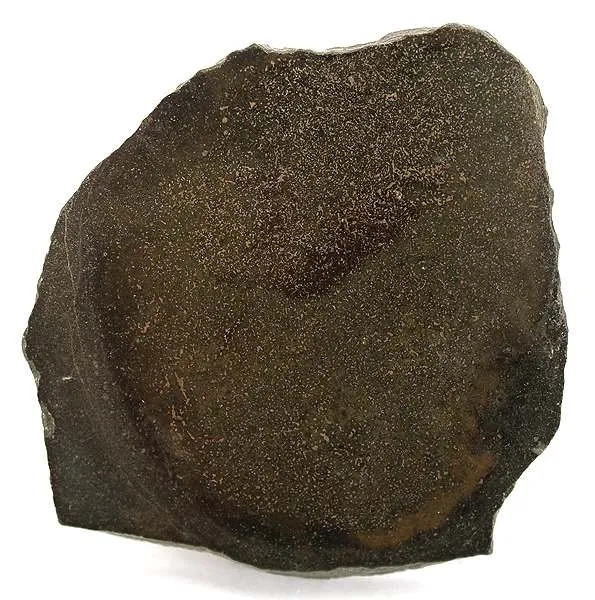
Photo: Robert M. Lavinsky, CC BY-SA 3.0, via Wikimedia Commons
Walk the stockyard of almost any British hard-rock quarry and you will find a problem dressed as a waste stream. Quarry fines — the dust and small chips generated by blasting and crushing — accumulate in mounds that are expensive to handle and awkward to sell. Enhanced weathering proposes to turn a portion of that material into a carbon-removal product by spreading it on land, where it reacts with soil water and carbon dioxide and locks carbon into dissolved bicarbonate and solid carbonate.
For the past decade this was a laboratory pursuit, dominated by university consortia and a small number of field trials. In 2026 it is becoming an operations question. Carbon-removal buyers want volume with evidence attached, aggregate companies own both the feedstock and the land, and the agricultural sector is cautiously interested in a soil amendment that may also lift pH and release nutrients. The commercial case, however, is narrower than the enthusiasm suggests.
A by-product with a carbon price attached
The attraction for an aggregates business is not the rock dust itself, which is cheap, but the value stack around it. A quarry already holds planning consent, plant, weighbridges, haulage relationships and land. Adding a weathering pilot can be positioned as beneficial reuse of a secondary material, potentially reducing stockyard costs while creating a second revenue line through carbon-removal credits or, more lucratively, direct offtake agreements with buyers who need verifiable tonnes.
That stack is why the interest has come from operators rather than from carbon-market intermediaries alone. The intermediary can find a buyer; only the operator can find the rock, the land and the licences.
What the science does and does not yet prove
The underlying chemistry is not in doubt. Silicate minerals, particularly basalts and olivines, weather in the presence of carbonic acid and convert atmospheric carbon dioxide into stable products. What remains contested is the rate. Weathering speed depends on mineralogy, grain size, soil temperature, moisture and the rate at which reaction products are flushed away; slow the flushing and the reaction stalls, speed it up and alkalinity, along with trace elements, heads for the nearest ditch.
UK research has advanced materially. The Leverhulme Centre for Climate Change Mitigation at Sheffield and the UKRI-funded greenhouse gas removal research programmes have generated field evidence from British soils, and the picture emerging is that measurable, credible removals are achievable but sensitive to site conditions and to the quality of measurement. The claims that travel badly are the ones that extrapolate from a single season, a single soil type or a laboratory mesocosm.
The regulatory gap
There is no dedicated UK regime for enhanced weathering. That is both an opportunity and a trap.
On the waste side, quarry fines are not automatically a product. Unless end-of-waste criteria or a by-product determination apply, spreading them on land may engage environmental permitting, and the Environment Agency will want to see the material characterised, the application rate justified and the risk to water controlled. On the carbon side, the UK does not yet recognise enhanced weathering within a compliance market; the voluntary registries that do certify it, including the methodologies developed by Puro.earth and other standard-setters, impose their own sampling, quantification and permanence rules which may not align neatly with a UK operator's record-keeping. And on the agricultural side, spreading a fine dust raises practical questions of dust nuisance, silage contamination and livestock, all of which will surface at the first parish council meeting.
Operators should assume that the permitting position will be negotiated case by case, and that a friendly conversation with a regulator is not a determination.
The unit economics: logistics first
Most enhanced weathering cost curves are dominated by three items: grinding the rock fine enough to react, moving it, and proving that the carbon was actually removed. Of these, transport is the most brutal. A removal tonne carries a surprising weight of silicate, so the distance between quarry and field, and the backhaul availability, can decide whether a project is profitable before the chemistry is even discussed.
Companies that already run tipper fleets between quarry and farm gate have a structural advantage here, and quarries close to arable land with high rainfall and free-draining soils are the obvious early candidates. Highland and western sites may be better weathering environments but worse logistics; the reverse holds in the drier east.
A due-diligence checklist for operators
- Feedstock characterisation. Mineralogy, grain size distribution, calcium and magnesium content, and a full trace-metal suite including nickel and chromium.
- Baseline soils. pH, cation exchange capacity, existing carbonate, hydrology and drainage, established before a single tonne is spread.
- Water risk. Proximity to watercourses, abstraction licences, and the alkalinity and metal load the site can tolerate under existing consents.
- Waste status. Written confirmation of how the material is classified and what permit or exemption applies to land spreading.
- Measurement plan. Which quantification approach, which independent verifier, and who pays for the sampling in years two to five.
- Credit contract terms. Durability, additionality, buffer pools, replacement obligations and what happens if verification fails.
- Lifecycle accounting. Grinding energy, haulage emissions and the net removal figure after both are deducted.
- Pilot scale. A defined hectare count, a control plot and a stop rule agreed in advance.
- Community and nuisance. Dust management, working hours and a communications plan that anticipates complaints.
- Exit. Who owns the data, the credits and the agricultural relationships if the pilot is discontinued.
Start small, verify hard
The commercial temptation is to scale quickly in order to fill a buyer's order book. The prudent route is the opposite: a single quarry, a defined spread area, a paid-for verification partner and a buyer contract that is honest about uncertainty. Enhanced weathering will probably become a genuine line item for UK aggregate producers, but it will reward the operators who treat it as a technical process with a marketing story, rather than a marketing story with a technical appendix.