Hollow Ground: Why Britain's Salt Beds Are Now a Strategic Asset Class

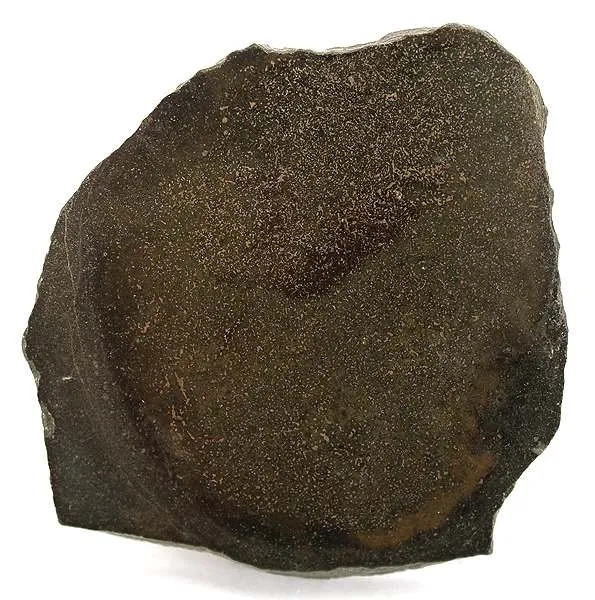
Photo: jc.winkler, CC BY 2.0, via Wikimedia Commons
For most of the past century, salt in Britain was a chemical feedstock. Brine fed the alkali works of Cheshire and Teesside, and the cavities left behind were treated as a by-product of the process, occasionally useful for storing gas, mostly a matter for subsidence claims. That hierarchy is being inverted. Across the UK, the empty space itself is now the asset, and the geology that hosts it has moved from the engineering annexe to the board pack.
The reason is straightforward. A power system built around wind and solar needs somewhere to put surplus electrons, and hydrogen produced by electrolysis needs somewhere to sit between production and demand. Salt caverns happen to be excellent at both. They are gas-tight, self-healing under pressure, capable of high injection and withdrawal rates, and available in a country whose gas storage capacity has long been thin relative to its neighbours, measured in days of peak winter demand rather than weeks.
What has changed in 2026 is not the geology but the commercial temperature. Hydrogen storage projects that spent years in feasibility are now negotiating capacity agreements, while compressed-air and liquid-air schemes in former brine fields are testing whether their economics survive contact with real equipment costs.
From strategic reserve to traded capacity
The UK's storage history is instructive. The closure of the Rough facility in 2017 and its partial reopening in 2022 exposed how little buffer the country held, and how quickly a security-of-supply question can become a price question. But the new wave of projects is not a return to strategic gas storage. It is a bet that storage will become a chargeable service, sold to hydrogen producers, industrial clusters and eventually to power generators seeking to arbitrage a volatile grid.
That reframing has consequences for governance. A strategic reserve is a policy asset, funded or underwritten accordingly. A traded service is a commercial asset, and commercial assets are valued on contracted cash flow, counterparty quality and the residual liability that survives the contract.
Where the rock is right
Two geological provinces dominate. In East Yorkshire and Teesside, the Zechstein sequence offers thick, laterally extensive salt at depths that suit cavern development; the brine fields around Aldbrough and Atwick, and the legacy industrial sites around Billingham and Wilton, have attracted the most serious interest. In the Cheshire Basin, Triassic halite has been worked for centuries around Northwich, Middlewich, Holford and Warmingham, leaving both worked-out cavities and unexploited beds close to the industrial demand of the north-west. Northern Ireland's Islandmagee project illustrates a third, smaller cluster with its own regulatory and political context.
Geology alone does not decide viability. Cavern height, roof integrity, the presence of insolubles and the quality of the caprock determine how fast a cavern can be cycled, and cycling is where the revenue is. A storage asset designed for seasonal gas movements behaves quite differently from one built for daily hydrogen swing, and the design choice is effectively irreversible once the first cavern is leached.
Permitting is five gates, not one
Directors accustomed to single-consent infrastructure are frequently surprised by how many approvals a salt-cavern project requires. Planning permission sits with the minerals planning authority, ordinarily a county or unitary council, and the application will be judged on subsidence, traffic, discharge and restoration. The Environment Agency controls brine abstraction, surface discharge and mining waste, and its view on chloride loading to local watercourses can shape the entire project timetable. Mineral and land rights are often severed from surface ownership, so wayleaves and agreements must be traced before design is fixed. Health and safety obligations, including well-integrity and major-accident rules, sit with the regulator rather than the planning system. And for hydrogen specifically, the regime created by the Energy Act 2023, with licensing functions exercised through Ofgem alongside the business model being developed by DESNZ, is still maturing.
Each gate has its own clock. The slowest one sets the project date, and it is rarely the one the engineering team is watching.
The liability does not retire
Salt moves. Cheshire's brine-pumping legacy was serious enough to produce a statutory compensation regime, administered by the Cheshire Brine Subsidence Compensation Board, which has operated since the nineteenth century and is funded by a levy on brine producers. Any operator contemplating new caverns in that basin should assume the subsidence question will be asked in public, and answered in front of the planning committee.
Beyond subsidence lies the longer tail: well integrity over decades, cavern abandonment, monitoring obligations, and the cushion gas that must remain in the cavern to maintain pressure. For a hydrogen project, cushion gas is not a trivial line item — it is a substantial inventory of an expensive molecule, and the question of who owns it, who pays for it and how it is valued at the end of the contract deserves to be settled in the term sheet rather than in arbitration.
Seven questions for the board
- Who owns the salt, the pore space and the surface rights, and are all three secured for the asset's full design life?
- What is the evidence base for caprock integrity, and has it been reviewed by someone who is not paid by the project?
- Who funds the cushion gas, and how is it valued on exit?
- Which regulatory regime will govern the service, and who bears the risk if it is reclassified?
- What cycling profile is assumed, and what happens to the model at half that number?
- How large is the decommissioning and monitoring obligation, and is it bonded, insured or simply promised?
- What are the liability caps, and whose balance sheet stands behind them in year thirty?
The salt did not change. The market around it did, and the boards that treat geology as a strategic, priced and contractually bounded asset rather than a technical curiosity are the ones likely to end up holding capacity that someone else needs.