Heaps With History: A Diligence Scorecard for Britain’s Legacy Smelter Sites
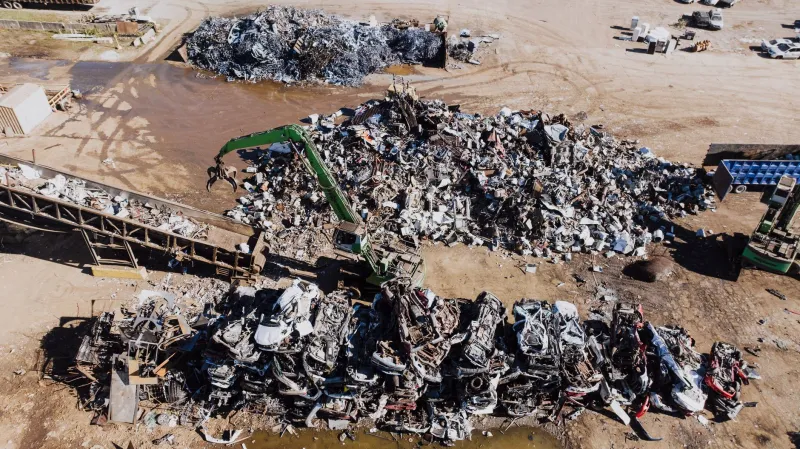
Britain’s industrial record is written in heaps. Around former smelters, refineries and metal-processing works, slag banks and tailings deposits remain long after the chimneys have gone. For decades they were treated as liabilities: ugly, dusty and occasionally leaching. As the UK’s critical-minerals agenda matures in 2026, they are being examined as something else—low-grade orebodies with planning history, infrastructure and, sometimes, a shorter path to production than a greenfield mine.
The proposition is not that every slag heap is a mine in waiting. It is that a disciplined diligence process can separate those brownfield sites that merit capital from those that merely carry an attractive assay. For boards and investors, the question is less “what metal is in the heap?” than “what permits, title and offtake would allow it to be sold?”
Why the heap deserves a second look
Historic smelting and refining concentrated metals into slag, flue dusts, residues and tailings. In some cases, the resulting material carries zinc, lead, tin, copper or other metals at grades that compare favourably with primary ore. The material is already above ground. Roads, rail links, power connections and industrial neighbours often exist. There is no exploration camp to build and no new shaft to sink.
That combination can compress the path from study to sale. A brownfield recovery project may be able to move through resource definition, permitting and plant construction in a fraction of the time required for a greenfield development. But speed is conditional. It depends on clean mineral title, a credible contamination strategy and a permitting route that local authorities and regulators can accept.
Test one: who owns the heap?
Mineral title is the first filter. Slag and tailings may be treated as land, waste, chattel or part of a broader mineral estate, depending on how they were created and conveyed. Rights may have been severed from the surface decades ago. Historic leases, covenants and sale agreements can leave the right to process material in one hand and the liability for it in another.
A buyer should trace the chain of title for the site and for the material itself. It is not enough to own the freehold if an earlier conveyance reserved the minerals or imposed restrictions on working. Access rights, rights to install processing plant and rights to transport product must also be verified. Where the site sits within a larger regeneration scheme, planning obligations and remediation agreements may further constrain what can be removed and sold.
Test two: contamination is part of the resource model
Legacy smelter sites carry heavy-metal signatures. Leachate, dust and groundwater impacts are common concerns, and the material itself may remain classified as waste until it has been treated or recovered. The Environmental Protection Act 1990 and the contaminated-land regime, together with environmental permitting, create liabilities that can follow owners and occupiers.
Diligence should therefore include a phase one desk study, targeted sampling, leachate testing and a hydrogeological review. Dust dispersion and surface-water pathways matter as much as the metal grade. The commercial model should carry a realistic cost for containment, monitoring and, where necessary, remediation. An indemnity or warranty is useful only if it is backed by a solvent counterparty and clear contractual caps.
A heap with excellent grades but unresolved contamination can be a negative-value asset. The board should ask whether the project is buying a resource or inheriting an enforcement file.
Test three: the permitting route sets the timetable
Planning and environmental permitting will determine whether the project can meet its stated schedule. A minerals recovery operation may require planning permission, an environmental permit and associated water or discharge consents. The local minerals plan, neighbouring land uses and ecological sensitivities all shape the risk of challenge.
Brownfield status can help. Previously developed land may be viewed more favourably than a new greenfield site, and existing industrial infrastructure can reduce visual and traffic impacts. But regulators will still test the proposal on its merits. Early engagement with the Environment Agency, the local planning authority and statutory consultees is essential. A permit strategy that assumes consent by right is not a strategy.
Test four: metallurgy and offtake must be proved together
Slag is not uniform. Mineralogy, liberation and deleterious elements can vary across a single heap. Bench-scale testwork should establish recoverability, concentrate quality and the likely reagent and energy consumption. A pilot programme is often the point at which contained metal becomes a saleable product.
Offtake diligence should run in parallel. UK and European smelters and refiners will care about consistency, penalty elements and delivery logistics. A letter of intent is not the same as a binding offtake agreement. The project needs a credible route to market for the recovered material, not simply a laboratory report showing that the metal is present.
Test five: time-to-market is the real advantage
The central commercial claim for brownfield recovery is speed. A greenfield mine may take a decade or more to move from exploration to production. A legacy smelter site can, in the right circumstances, be producing within a few years. That advantage has value, but it must be priced against the risks of title defects, contamination and permitting delay.
A practical scorecard should weight five tests: title and access; contamination and liability; permitting and planning; metallurgy and offtake; and capital intensity. Each should be scored on evidence, not ambition. The resulting picture will not be uniform. Some sites will be straightforward recovery opportunities. Others will be remediation projects with a metal credit.
A boardroom test, not a treasure hunt
Britain’s legacy smelter sites are part of the country’s mineral inheritance. They may yet make a useful contribution to domestic supply of zinc, lead, tin and other critical metals. But the opportunity is not a treasure hunt. It is a diligence exercise in which legal, environmental and commercial risks are as important as grade.
For investors, the discipline is simple: do not pay for contained metal. Pay for title that can be enforced, permits that can be obtained, a process that can be financed and a product that can be sold. On that basis, the heap with history may indeed beat the hill with promise.