The Unfired Asset: Underwriting UK Brick Clay Against Housing Need
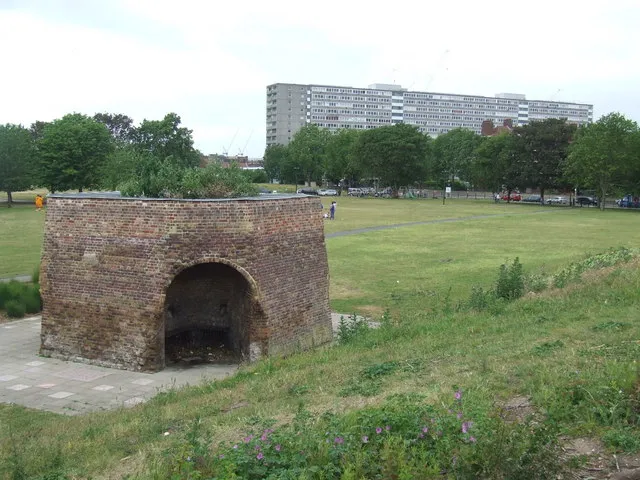
Photo: Ashley Dace , CC BY-SA 2.0, via Wikimedia Commons
Brick clay is the quiet mineral of the UK construction supply chain. It does not attract the attention given to lithium, tungsten or potash, and its unit value is low enough that it seldom merits a dedicated slide in an investor presentation. Yet every masonry home, every extension and every school block depends on a reserve of suitable clay within economic haulage distance of a kiln. When housing delivery is a policy priority and energy costs remain volatile, that reserve deserves the same diligence discipline applied to any other extractive asset.
A mineral that hides in the planning system
Brick clay is not a single material. Brickearth, fireclay and shale are all worked for brick and tile manufacture, and their commercial value depends on plasticity, colour, firing behaviour and consistency rather than on headline grade. The British Geological Survey and local mineral plans distinguish between these materials, but board-level reporting often collapses them into a single line item. That is a mistake. A reserve of brickearth suited to a soft-mud process is not interchangeable with a shale reserve feeding a high-temperature tunnel kiln.
The active brickworks estate is concentrated in a relatively small number of clay fields: Bedfordshire and Cambridgeshire, Kent, the West Midlands, Yorkshire and the North West. Around these works sit dormant pits, some with extant planning permissions and some with conditions that have never been implemented. A dormant consent can be a hidden asset if it preserves access to a reserve near a viable kiln. It can also be a hidden liability if it carries restoration obligations, time limits or community expectations that no longer match the site's commercial prospects.
Mineral planning authorities hold the key. County and unitary councils set out brick clay allocations in their mineral local plans, and the strength of that allocation matters more than a headline reserve figure. A site that is not allocated, or that sits outside a defined brick clay consultation area, carries planning risk that a desk-top tonnage estimate will not capture.
Housing targets do not translate directly into brick demand
Housing need is measured in dwellings. Brick demand is measured in square metres of masonry, in specification choices and in the mix between private sale, affordable rent and build-to-rent. A board should model brick demand by product segment rather than by headline housing numbers. Timber frame, modular construction and imported brick all take share from UK clay, and the tenure mix of a housing programme can change the intensity of brick use per unit.
The current policy emphasis on brownfield land and higher-density development also affects the picture. High-rise and light-gauge schemes use less brick per dwelling than low-rise masonry housing, even when the external finish is brick. For a clay reserve, the relevant question is not simply how many homes are planned, but how many of those homes will be built with clay masonry in the regions the kiln can serve.
Kiln energy is the variable that sets reserve value
Clay is worthless without a kiln that can fire it economically. Brick manufacture is energy-intensive, and the UK industry's move away from natural gas towards hydrogen, electrification and biomass is not a uniform transition. A reserve adjacent to a kiln with an uncertain energy pathway is not equivalent to one beside a modern, fuel-flexible plant. Energy capital expenditure can concentrate production into fewer, larger works, leaving smaller pits stranded even where clay quality is good.
This is where brick clay diligence departs from conventional mineral valuation. The reserve is only one half of the asset. The other half is the kiln, its age, its emissions profile and its route to decarbonisation. A board should ask whether the kiln has a credible capital plan, whether the site has grid capacity for electrification, and whether the product mix can absorb higher firing costs. Those answers determine whether the clay is a strategic reserve or a stranded one.
Restoration is a debt-like obligation, not a footnote
Brick clay workings are often shallow and close to settlements, which makes restoration and aftercare unusually visible. Planning conditions may require agricultural reinstatement, amenity land, landfill engineering or habitat creation, and the aftercare period can run for years beyond the last firing. Those obligations should be treated as debt-like items in any valuation, not as a closing adjustment.
Restoration security is also a commercial variable. Bonds, guarantees and other financial assurances tie up capital, and a weak sponsor can find the liability outrunning the residual value of the clay. Biodiversity net gain adds a further layer: it can create saleable habitat units and improve the planning case, but it also adds measurement, monitoring and long-term management costs. The right question is not whether restoration is desirable, but who pays, over what period, and with what security.
Five tests before the term sheet
A practical boardroom scorecard for brick clay should start with five tests.
- Reserve-to-kiln fit. Establish tonnage, material type, quality variability and haul distance. A reserve that cannot be fed economically to a specific kiln is not a reserve in commercial terms.
- Consent durability. Check the mineral planning permission, its conditions, time limits and review provisions. Dormant permissions need particular scrutiny.
- Kiln pathway. Assess fuel strategy, emissions compliance, capital expenditure and product mix. The kiln is the asset that gives the clay its value.
- Restoration provisioning. Model restoration and aftercare costs, financial security and afteruse value. Treat the obligation as a liability with a duration.
- Community and planning licence. Review local plan allocation, highways routes, dust and noise controls, and the history of local objections. Brick clay is a neighbour-facing mineral.
Brick clay will never be a glamorous asset class. It is bulky, low-value and local. But it is also strategic, long-lived and difficult to substitute at short notice. As housing policy and kiln decarbonisation reshape the UK brick supply chain, the boards that diligence clay reserves with the same rigour they apply to metals and energy will be better placed to distinguish a working asset from an unfired one.