Acid Test: Diligencing the Grade Risk Beneath Britain’s Fluorspar Revival
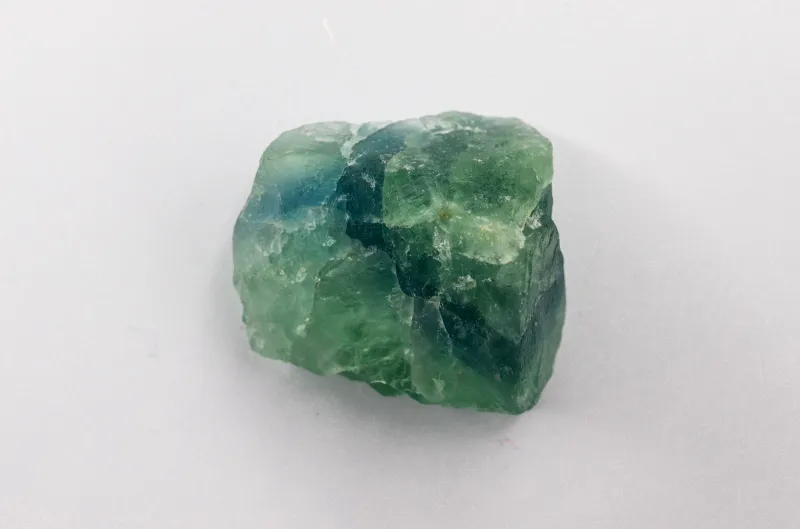
Fluorspar rarely commands a room. It is not lithium, copper or rare earths, and it does not lend itself to the kind of promotional shorthand that animates critical-minerals conferences. Yet fluorite—calcium fluoride, CaF2—sits inside supply chains that are difficult to substitute quickly: hydrogen fluoride, aluminium smelting, steelmaking, refrigerants and a growing list of fluorochemical applications. For UK business readers, the interesting question is not whether fluorspar is strategic in the abstract. It is whether any particular UK project can convert a mineralised deposit into a bankable, permitted and contracted business at a grade the market will actually pay for.
As of late 2026, that question matters more than the policy rhetoric. The UK has a long fluorspar history, particularly in the Pennine orefields of Derbyshire and the North Pennines, where fluorite occurs in lead-zinc vein systems. Those workings also explain a persistent source of confusion in investment commentary: historical production is not the same as current capacity. Britain today is overwhelmingly reliant on imports for its fluorspar needs, and that dependence has attracted policy attention as supply-chain resilience has moved up the agenda. Fluorspar’s presence on critical-minerals lists—whether in the UK or in allied jurisdictions—is a signal, not a subsidy. It tells you that governments care about availability. It does not tell you that a junior developer can finance a mine.
Strategic, But Not Automatically Investable
The strategic premium now being discussed in UK critical-minerals circles is real but conditional. It attaches most reliably to material that meets acid-grade specifications and can be delivered consistently to a qualified customer. It attaches weakly, if at all, to a resource statement that has not been tested through a bankable beneficiation route.
That distinction matters because fluorspar is not one product. Metallurgical-grade fluorspar, often called metspar, is used in steelmaking and generally tolerates lower CaF2 content and higher impurities. Acid-grade fluorspar, or acidspar, typically requires much higher purity—commonly above 97% CaF2—with tight limits on silica, sulphur, phosphorus and other deleterious elements. The price gap between the two is not a rounding error; it is the difference between a niche industrial supplier and a strategic feedstock business.
Grade Is the First Filter
For a diligence team, the central question is therefore not what the grade is, but what the grade becomes after realistic beneficiation, at what recovery, and with what variability. A drill result that reports high-grade intercepts can be encouraging, but it does not answer the metallurgical question. Fluorspar often requires flotation, gravity separation or dense-media techniques, and the flowsheet must be tested on representative material. Investors should look for locked-cycle testwork, impurity profiles, mineralogical liberation data and a clear statement of the product specifications the process can achieve. If a company is promoting an acid-grade narrative without acid-grade testwork, the premium is premature.
There is also a reporting discipline issue. Resource statements should be read alongside the assumed product and cut-off grade. A deposit that is economic as metspar may not be economic as acidspar once recovery and impurity penalties are applied. Conversely, a smaller, higher-grade body with a simple flowsheet can be more valuable than a large, low-grade resource that requires complex processing. The diligence task is to reconcile the geological model with the process model before accepting the commercial model.
Peak District Constraints and the Permitting Clock
UK fluorspar projects are also exposed to a planning environment that is far less forgiving than the geology. Much of the historic Derbyshire fluorspar ground lies within or close to the Peak District National Park, where mineral development must clear a high bar on landscape, biodiversity, traffic, dust and restoration. Even outside national park boundaries, mineral planning authorities will test whether a proposal is consistent with local minerals plans, whether it can be worked without unacceptable amenity impacts, and whether restoration and aftercare are properly secured.
Water is a related constraint. Mine dewatering, discharge consents and protection of groundwater can shape both the operating cost and the timetable. A project that looks compact on a map may require discharge permits, surface-water management and habitat mitigation before first sale. For business readers, the practical point is that permitting is not a downstream administrative step. It is a critical-path item that can reset the investment case. A fluorspar project with a strong resource but an unresolved planning route should be valued as an option, not a mine.
Offtake, Logistics and the Import Substitution Story
The commercial case for UK fluorspar often rests on import substitution. That is a plausible narrative, but it needs to be tested at the level of specification and logistics. Acidspar customers are quality-sensitive. They qualify suppliers, audit processes and expect consistency. A UK producer may have a freight advantage into European or domestic fluorochemical supply chains, but it will still need to demonstrate that its product meets the customer’s specification and that it can deliver reliably through the cycle.
Investors should also examine offtake structures carefully. A non-binding letter of intent is not a contract. A contract with a broad specification range may not support the price assumption in a financial model. The strongest evidence is a binding agreement with a creditworthy counterparty, clear product specifications, volume bands and price mechanisms that reflect the acid-grade market rather than a generic fluorspar index.
A Diligence Framework for UK Fluorspar
Five tests are useful before assigning a strategic premium. First, verify the product: independent confirmation of acid-grade suitability, not just high-grade intercepts. Second, verify the process: representative metallurgical testwork, recoveries and impurity control. Third, verify the permit path: planning, water and restoration liabilities, with realistic timelines. Fourth, verify the customer: binding offtake, specification fit and logistics. Fifth, verify the balance sheet: sufficient capital to reach production without a distressed financing.
Fluorspar deserves a place in UK critical-minerals analysis because it is genuinely difficult to substitute in several industrial chains. But it is not a commodity where a strategic label does the work of a feasibility study. The quiet opportunity is in the grade, the flowsheet and the permit. The risk is in assuming that a mineralised vein, a historical mine or a policy list is the same thing as a bankable business.