The Clearest Sand: Underwriting UK Silica Supply Before the Solar-Glass Story
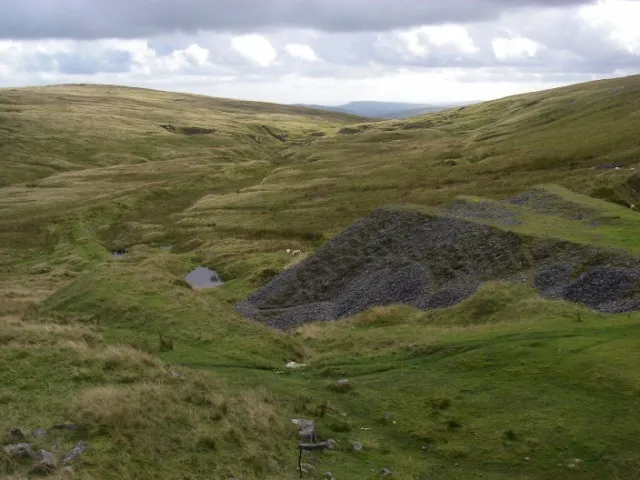
Photo: Alan Bowring, CC BY-SA 2.0, via Wikimedia Commons
The political case for rebuilding Britain's solar supply chain is now well rehearsed: energy security, industrial resilience, the substitution of imported modules with domestically made ones. What receives far less attention is that a solar module is, by mass, largely glass — and that the glass in question is not ordinary container glass. It is a low-iron float product whose optical transmission depends on the quality of the silica sand beneath it. Before any investor signs an offtake memorandum with a would-be UK glassmaker, they should be able to answer a simpler question: which British deposits can physically deliver sand at the required specification, and under what conditions?
The answer is more constrained than the deposit map suggests. Britain has a long silica-sand tradition — the Lower Greensand workings around Leighton Buzzard, the Norfolk deposits near Leziate, the Lochaline operation on the Sound of Mull, and various Carboniferous and Permian sands elsewhere. But a tradition of foundry and filtration sand does not translate automatically into a solar-glass feedstock. The gap between 'silica sand' and 'low-iron silica sand suitable for a float furnace' is where most of the risk sits.
Why the iron figure governs the investment case
The defining specification for photovoltaic cover glass is iron content, conventionally expressed as Fe2O3. Standard float glass tolerates several hundred parts per million; solar glass typically needs to sit in the low hundreds, and the best transmission grades below that. Iron absorbs in the near-infrared and, in the ferrous state, in the visible band, so every additional part per million is a direct tax on module efficiency. A glassmaker buying on specification will not accept a feedstock that drifts, and a furnace campaign may run for eight to twelve years — meaning the sand must be consistent for a decade, not merely compliant on the day of the assay.
That has a diligence consequence. A single composite sample from a stockpile tells an investor almost nothing. The relevant evidence is a borehole-by-borehole dataset showing lateral and vertical variability in iron, alumina and, critically, heavy minerals. Chromite, zircon and other refractory grains do not merely discolour the melt; they form unmelts and stones that become reject rates at the float line. For an investor, the question is not 'is the average grade acceptable' but 'what proportion of the reserve can be delivered within a tight specification band without selective mining that destroys the economics'.
Reading the UK deposit map realistically
A small number of UK localities are genuinely in contention. The Lochaline sand, worked on the Morvern peninsula, has long been associated with high-purity glass applications, and its low iron and low heavy-mineral content make it a natural reference point for any solar-glass discussion. The Norfolk and Bedfordshire deposits have supported glassmaking for decades, but their suitability varies considerably by seam and by depth, and several are worked primarily for other markets. Granitic and kaolinised material from the South West can be beneficiated to glass grades, though at a cost that must be tested against freight savings.
Proximity to an existing float line matters as much as geology. The UK's remaining flat-glass capacity is concentrated and ageing, and a solar-glass investment would either require a new furnace — a capital commitment in the hundreds of millions of pounds — or a retrofit that may not be technically feasible for low-iron operation. Investors should treat any proposal that begins with glass capacity and works backwards to sand as a warning sign. The sequencing should be reversed.
Beneficiation: the cost line that gets underestimated
Very little UK sand meets glass specification at the pit head. Washing, attrition scrubbing, magnetic separation and, in some cases, flotation are typically required. Each step carries a yield penalty: removing iron-bearing coatings and heavy minerals also removes material, sometimes a substantial fraction of the run-of-mine tonnage. The economic reserve is therefore not the geological reserve but the product tonnage after beneficiation, multiplied by the recovery the plant actually achieves in steady state rather than in pilot runs.
Diligence should press for continuous pilot data, not batch results, and for mass balances audited by an independent laboratory. Questions worth asking include: what is the magnetic separator's demonstrated performance on this specific feed, not on a generic one? What is the water demand per tonne of product, and is the abstraction licence consistent with it? What happens to the magnetic reject — is it a saleable by-product, a restoration liability, or both? Silica sand operations generate large fines volumes, and the disposal route for those fines is a permitting matter as much as an economic one.
Tenure, planning and the restoration ledger
Mineral ownership in England and Wales is frequently severed from surface ownership, and silica sand is not a conventional 'bulk' mineral for these purposes. A promoter who controls the freehold but not the mineral estate controls nothing of value. Investors should require a title report that reconciles the mineral register, the Land Registry position and any historical leases, and should test whether the operator's rights extend to the deeper, cleaner seams that beneficiation would need.
Planning is the second gate. Silica sand sites tend to sit in areas that have attracted Green Belt designation, conservation interest or longstanding local opposition to HGV traffic. The relevant test is not whether permission exists but whether the conditions attached to it — hours of operation, lorry routing, dust monitoring, watershed restoration — are compatible with supplying a furnace that runs continuously. A site permitted for twenty loaded movements a day cannot serve a float line needing many times that. Restoration security, now a live issue across the quarry sector, should be modelled as a cash cost with a realistic date.
Freight and offtake: the two tests that decide bankability
Sand is heavy and low-value per tonne, which makes haulage distance a first-order economic variable. Rail connections are rare at silica sites, and road haulage of bulk sand over long distances erodes margin quickly. A deposit three hours from the glass plant may be geologically superior and commercially inferior. Investors should model freight on realistic load factors, current haulage rates and the assumption that fuel and driver costs rise rather than fall.
Offtake credibility completes the screen. A solar-glass furnace is a single large buyer with high switching costs after qualification, which cuts both ways: once qualified, the supplier has a durable position; before qualification, the buyer holds all the leverage. The qualification cycle itself — melting trials, optical testing, successive sample approvals — can run into years. Any revenue model that assumes first production converts immediately to contracted sales should be discounted heavily. Better to ask who the counterparty actually is, what their balance sheet supports, and whether the offtake survives a change of ownership at the glass plant.
A five-test screen before the term sheet
For boards assessing a UK solar-glass or silica-sand proposition in 2026, a disciplined sequence is available. First, verify specification from borehole data rather than composite assays, with variability quantified. Second, confirm mineral title and the depth of rights required. Third, test beneficiation through continuous piloting with an audited mass balance and a water strategy that matches the permit. Fourth, price the planning envelope, including restoration security and haulage routing. Fifth, stress the offtake for counterparty credit and qualification timing.
None of this is exotic. It is the ordinary diligence that the aggregates and industrial-minerals sectors apply to any long-life supply proposition. The temptation in a policy-driven narrative is to skip it, because the strategic argument feels sufficient. It is not. The solar-glass story may well prove durable, and Britain's better silica deposits may well have a role in it — but the returns will be decided by grade consistency, recovery, tenure and tonnage moved, not by the ambition of the announcement. Underwrite the sand first; the glass will follow or it will not.