Void Value: Underwriting Pumped Storage in Britain’s Worked-Out Quarries
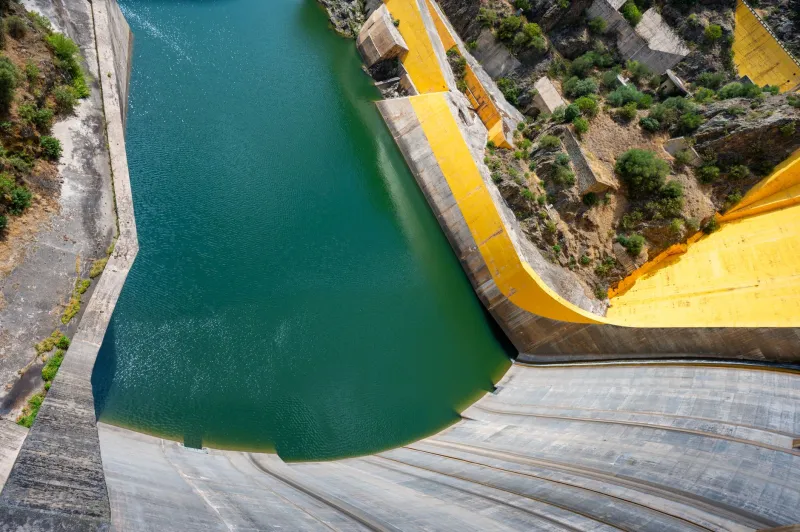
As of November 2026, the UK’s electricity system is absorbing more variable renewable output than ever, and the case for long-duration storage has moved from policy appendix to board agenda. Pumped hydro remains the largest mature technology in that category. It is also one of the slowest to build, which is why disused aggregate quarries keep returning to the conversation: a worked-out void can look like a ready-made lower reservoir, with road access, grid proximity and a mineral planning history already in place.
The attraction is understandable. A quarry that has finished producing stone may still have a deep sump, steep sidewalls and a high-level donor site nearby. In the right geometry, that combination can support a closed-loop pumped-storage scheme or one of the gravity-based alternatives now being promoted. But the gap between a promising void and a bankable project is wide. For mineral owners, operators and investors, the task is not to assume storage optionality. It is to price it only after the engineering, water, planning and liability tests have been run in the correct order.
Why a quarry void is not automatically a reservoir
The first test is geometric. A pumped-storage scheme depends on usable head, working volume and the ratio between stored energy and wetted surface. A deep, narrow void with a nearby high-level donor site is generally more attractive than a broad, shallow lagoon. The former concentrates head and reduces evaporation losses; the latter may require larger embankments, longer water conveyance and more expensive civil works. Investors should ask for a mass-balance model, not a concept sketch. The model should show minimum and maximum operating levels, dead storage, sediment allowance, evaporation and seepage under dry, average and wet years.
Geology matters as much as shape. Quarry slopes were designed for extraction, not for repeated drawdown and refill. Cyclic loading can mobilise weak seams, destabilise benches and increase rockfall risk. Sediment washing into the lower reservoir can reduce volume and damage pumps. Water chemistry may be benign in one void and corrosive or nutrient-rich in another. These are not fatal issues, but they are cost items that must be quantified before a headline storage capacity is taken seriously.
The water-rights test
Pumped storage is often described as a closed loop, but few UK schemes are truly water-neutral. There is evaporation, seepage, maintenance drainage and the need for make-up water to replace losses. A quarry void may also be connected to groundwater or surface-water receptors that impose minimum levels or compensation flows. The relevant permissions can include abstraction licences, impoundment licences, discharge consents and flood-risk permits, depending on jurisdiction and site history.
This is where many early-stage proposals lose momentum. A quarry dewatering permit may have been granted for mineral working and may be time-limited, or it may be tied to a restoration scheme that assumes the void will flood. Surrendering or varying that permission can alter the local water regime and trigger objections from neighbouring abstractors, anglers or conservation bodies. In England the Environment Agency is the key regulator; in Wales it is Natural Resources Wales; in Scotland, the Scottish Environment Protection Agency. Each will expect a water balance that is credible in a drought year, not only in an average one.
Water quality deserves equal scrutiny. A void that has been used for settlement or has received imported fill may contain contaminants that complicate discharge or disposal. If the scheme proposes to use a nearby river or aquifer for make-up water, the licence may be the binding constraint on capacity. A storage project that cannot secure its water rights has no reliable energy output, however favourable its head.
Engineering, environment and public safety
The environmental and safety file should be treated as a single package. Quarry voids often sit within or beside sites designated for nature conservation, geology or landscape value. The existing restoration plan may already promise a wildlife lake, public access or a heritage record of the working quarry. Converting the void into an active energy asset can conflict with those commitments, and the conflict will surface at planning, not at financial close.
Public safety is also more demanding than many sponsors expect. Drawdown cycles expose margins, change access and can create new hazards. Fencing, signage, surveillance and emergency planning must be funded for the life of the asset. If the upper reservoir is a new structure rather than an existing feature, its planning and safety case may be separate from the quarry permission. The same applies to pipelines, power lines and access roads.
Grid, planning and restoration on one timetable
A storage scheme is only as good as its connection. Proximity to a substation is not the same as available capacity. Investors should test the connection offer, the reinforcement cost, the queue position and the likelihood of curtailment. They should also model a revenue stack that includes wholesale arbitrage, balancing services and capacity mechanisms, and stress it against a downside case in which only arbitrage is available. Gravity storage variants may have a place, but their UK deployment record is thin; technology readiness should be reflected in the discount rate.
Planning is the next gate. Larger pumped-storage schemes may be routed through the nationally significant infrastructure regime in England and Wales, while others will sit with the mineral planning authority or a devolved consenting body. The restoration condition is the point too often left to the end. A project may extend the life of a restoration liability rather than extinguish it. The bond, aftercare obligation and long-term monitoring regime must be reviewed alongside the energy consent. If the operator changes, who holds the liability? If the scheme fails, does the site revert to the original restoration plan, and who pays for the difference?
A due-diligence checklist for mineral owners and investors
Before a quarry void is priced as a storage asset, six tests should be satisfied:
- Geometry and head: a verified volume model, operating range, head and energy calculation, including sediment and evaporation allowances.
- Water rights: abstraction, impoundment and discharge permissions confirmed as compatible with the restoration plan and credible in a drought year.
- Geotechnics and environment: slope stability under cyclic operation, water chemistry, contamination, ecology and public-safety costs.
- Grid and market: a connectable capacity, reinforcement cost and revenue stack tested against a low-support case.
- Planning and restoration: consenting route identified, restoration condition reviewed and liability allocated in the transaction documents.
- Title and covenants: mineral and surface ownership, access rights, wayleaves and any restrictive covenants that could bind the energy use.
The investment conclusion
Britain will need more long-duration storage, and some worked-out quarries will have a genuine role in providing it. But the value is site-specific and conditional. A void becomes an asset only when the water balance, geotechnics, grid offer and restoration liability are made to reconcile. Until then, storage optionality is a hypothesis, not a valuation. Mineral owners and investors should treat it as a diligence item with a cost attached, not a free call option on the energy transition.