Borehole Returns: Underwriting Mine-Water Heat for UK Property Portfolios
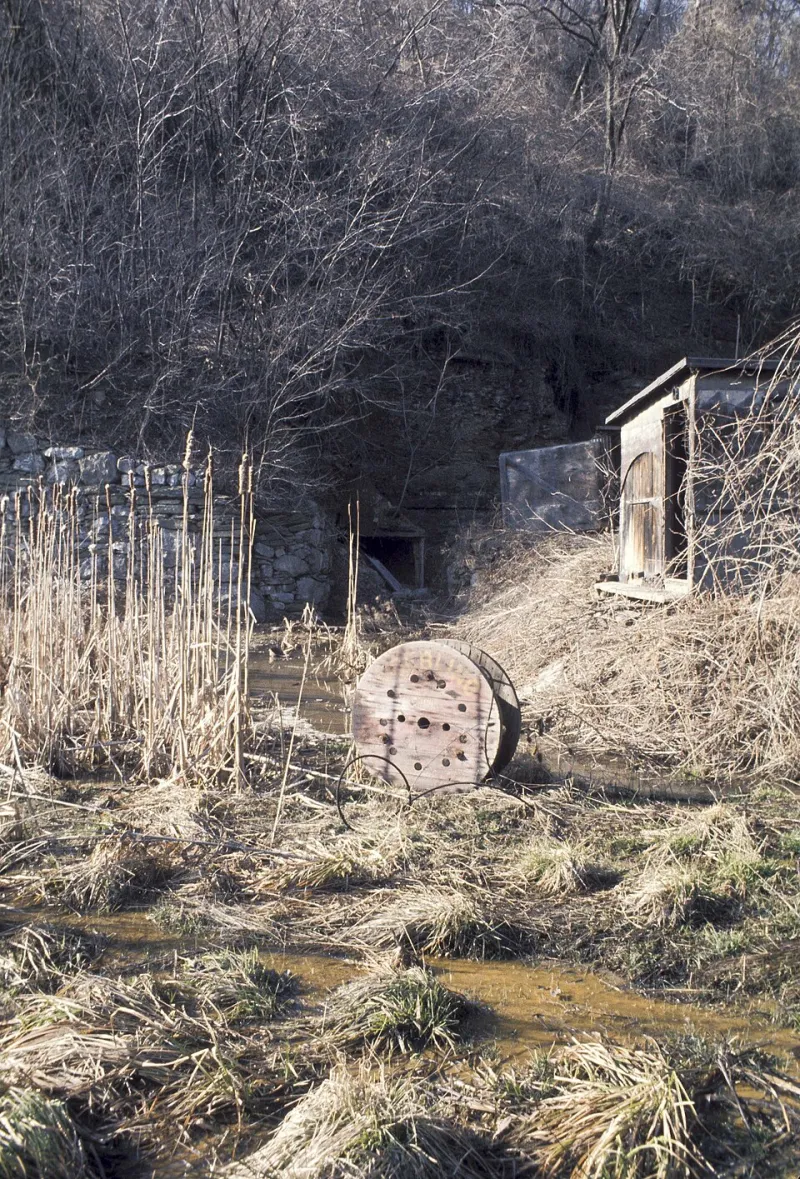
Photo: Paul Gipe, CC BY-SA 4.0, via Wikimedia Commons
The heat beneath the high street is not a metaphor. In former coalfields from Fife to Kent, abandoned workings hold billions of cubic metres of water warmed by geological heat and former mine infrastructure. Mine-water heat schemes draw that water, pass it through heat exchangers and use heat pumps to raise the temperature to a level suitable for district heating. For UK property portfolios, the proposition is attractive in principle: a long-lived, local, low-carbon heat source that can sit beneath estates, town centres and regeneration sites.
The commercial case, however, remains less mature than the engineering. Most UK schemes have been civic projects supported by public grants. Private landlords and infrastructure funds now need to underwrite mine-water heat as an asset, not a sustainability showcase. That means testing heat offtake, licensing, retrofit cost and regulatory treatment before committing capital.
From pilot project to portfolio asset
Early schemes, including the Gateshead mine-water heat network, demonstrated that the resource can supply buildings at scale. They also exposed the practicalities: water chemistry, pumping energy, heat-pump performance and the need for a dense cluster of customers. A mine-water scheme is not a generator selling into a wholesale market. It is a local heat utility whose returns depend on connected demand and the price customers pay for heat.
For a property portfolio, the natural starting point is an anchor cluster: council offices, leisure centres, social housing, universities, hospitals or a commercial estate with steady heat demand. The portfolio can supply land for an energy centre, easements for pipework and, critically, long-term offtake. Without that anchor, a scheme may struggle to reach the utilisation needed to justify its capital cost.
The revenue stack and its limits
Mine-water heat projects typically earn revenue from heat sales, connection or capacity charges, and sometimes cooling or other services where the infrastructure allows. The core contract is a heat supply agreement with each customer or a bulk supply agreement with an ESCo. Tenor, indexation, volume assumptions and pass-through of power costs matter more than the headline tariff.
Unlike some regulated utilities, UK heat networks do not yet offer investors a settled, long-term regulated asset base. The Heat Network Zoning framework and Ofgem's growing regulatory role may improve consumer protection and market confidence, but they also bring price and service obligations. Investors should model regulation as a risk, not a subsidy. A scheme that only works with grant funding and unregulated tariffs is a pilot, not an asset class.
Licensing and subsurface risk
The subsurface is not a free input. The Coal Authority holds key rights and permits relating to former coal workings, and scheme developers need access agreements, abstraction licences from the Environment Agency, discharge or re-injection permits where relevant, and planning consent for the energy centre and pipework. Water quality is a design issue: iron, salinity, dissolved gases and temperature can affect heat exchangers, pumps and discharge.
Diligence should therefore begin below ground. Pump tests, flow and temperature modelling, water chemistry and a clear view on sustainable abstraction are essential. So is an allocation of subsurface risk between the public and private partners. If the borehole underperforms, who bears the cost? If the water needs treatment, who pays? These questions belong in the term sheet, not the technical annex.
The retrofit gap
Mine water is usually too cool to feed existing radiators directly. Heat pumps lift the temperature, but the economics depend on the building's existing heating system. A well-insulated new-build can connect at low flow temperatures; an older commercial building with oversized radiators may need emitter upgrades, controls and fabric improvements. Retrofit capex can easily exceed the cost of the heat source.
That makes building-level surveys and a staged connection plan essential. Portfolio landlords should avoid treating a connection offer as a plug-and-play upgrade. The cheapest heat is the heat the building can actually use. A fabric-first approach, metering and transparent customer tariffs will also reduce the risk of customer resistance and bad debt.
Structures that can scale
Several structures are emerging. A council-led concession with a private ESCo can transfer design, build and operate risk while retaining public anchor demand. A joint venture between a property owner and an infrastructure investor can capture both heat sales and property value. A portfolio-level master heat supply agreement can aggregate demand across several buildings and give lenders comfort.
Debt providers will look for a credible construction contract, a defined operating regime, a supportive regulatory pathway and long-term offtake. Equity investors will look for a path to expansion: additional buildings, phased capacity and a replicable model across other former coalfield towns. Grant funding can bridge viability gaps, but it should not obscure the underlying unit economics.
Five tests before commitment
First, source productivity: flow rate, temperature, chemistry and sustainable yield. Second, demand density: anchor customers, contract tenor and willingness to pay. Third, retrofit cost per kilowatt-hour delivered, not per metre of pipe. Fourth, permitting and licensing timetable, including Coal Authority and Environment Agency consents. Fifth, regulatory and governance resilience under heat network zoning and consumer standards.
Mine-water heat can become a scalable asset class for UK property and infrastructure investors, but only where it is underwritten as a local utility with real customers, real permits and real retrofit costs. The heat beneath the high street is abundant. The bankable projects will be the ones that treat the surface contract with as much care as the subsurface resource.