Pore Space, Price and Precedent: Five Tests Before a UK Carbon Storage Bet
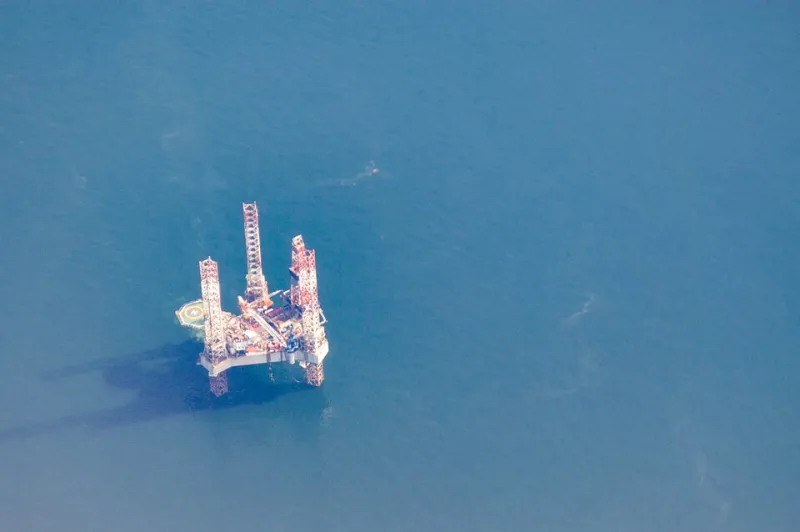
Photo: Supercarwaar, CC BY-SA 4.0, via Wikimedia Commons
Carbon storage in the UK has crossed a line that few infrastructure classes cross quietly: it has moved from policy aspiration to permitted commercial activity. Licences have been awarded, clusters have been designated, and a growing number of industrial emitters are being asked to sign storage agreements that run for decades.
That shift changes the nature of the diligence. A board that once assessed CCS as a policy exposure now has to assess it as a counterparty, a legal estate and a cost base. The questions below are the ones we would put to any management team seeking approval for a storage-linked commitment in 2026.
1. Who actually owns the pore space, and what does that ownership permit?
This sounds like a technicality and is in fact the whole transaction. The right to inject carbon dioxide into a geological formation is not the same as the right to explore for hydrocarbons, and it is not automatically held by whoever holds the adjacent production licence. Storage rights are conferred through a distinct licensing route, and they interact with the seabed estate, with any existing petroleum licences over the same acreage, and with the Crown's interests across different parts of the UK continental shelf.
Directors should ask for a clear map: which formation, which licence, which regulator, which overlapping rights. Where a storage complex sits beneath or alongside a depleting field, the interaction between the storage operator and the petroleum licensee can determine everything from well design to indemnity. If the answer to this question arrives as a diagram rather than a schedule of rights, keep asking.
2. Who carries the liability, and when does it move?
Long-term stewardship of a storage site is a public-good function, and the framework anticipates eventual transfer of responsibility from the operator to the state. The relevant question for an investor is not whether that transfer exists in principle, but what conditions gate it and how long the operator remains exposed before the gate opens.
A commitment that leaves a company holding monitoring and remediation obligations for a period measured in decades needs to be modelled as a liability, not a footnote. Boards should also examine what happens on insolvency or divestment mid-cycle: whether obligations run with the licence, whether a buyer must demonstrate financial standing, and whether a parent guarantee is required. Carbon storage is one of the few infrastructure assets where the exit route can be as tightly regulated as the entry.
3. What does monitoring actually cost at year fifteen?
Every project model contains a monitoring line item. Very few contain a credible one. The early years of a storage project are comparatively cheap to surveil because the operator is already mobilised, the wells are new and the data is dense. The cost curve changes as the plume migrates, as legacy wells require periodic verification and as the regulatory expectation of measurement, reporting and verification matures.
Ask for the monitoring plan as a schedule with unit costs, not as a percentage of capital expenditure. Then ask what happens if the regulator requires additional surveillance — more frequent seismic, additional observation wells, atmospheric sampling — because that is the scenario in which a marginal project becomes an uneconomic one.
4. Does the cluster arithmetic work for the emitter, not just the pipeline?
Cluster-level economics and emitter-level economics are frequently confused in public discussion. A shared pipeline and a shared storage complex can lower the unit cost of transport and injection dramatically, but an individual industrial site still bears the cost of capture, compression, connection and the tariff. For many UK emitters — particularly in ceramics, lime, cement and refining — capture represents the dominant cost and is itself energy-intensive.
Boards should model the full chain, including the effect of the storage tariff structure over time, the treatment of availability and interruption, and whether the emitter has any flexibility if the transport system is offline. A capture plant with nowhere to send its CO2 is an expensive way to curtail production.
5. What is insured, what is indemnified, and what is simply tolerated?
Insurance markets for geological storage remain thin and are priced on limited loss experience. That is not a reason to avoid the asset class, but it is a reason to be precise about the boundary between insurable risk, contractual indemnity and uninsured retention.
Ask which perils are covered, for what limit and for how long; whether coverage must be maintained as a licence condition; and how the position changes after liability transfer. Then compare that answer with the reserve the company has actually booked. In our experience the gap between the two is where boards discover they have been underwriting risk themselves without saying so.
The discipline the sector now needs
None of these questions is an argument against carbon storage. The geological case in the UK's offshore basins is strong, the policy direction is settled and the industrial demand is real. They are an argument for reading the licence before the press release.
The risk in any state-supported infrastructure programme is that scrutiny relaxes because the strategic case feels obvious. Storage will be judged in the end not by the capacity figures announced at cluster launch events, but by whether the operators who signed up can still service their obligations in 2046. The five questions above are a reasonable place to start testing that.