Beyond the Dredge Line: A Diligence Framework for UK Marine Aggregate Tenures
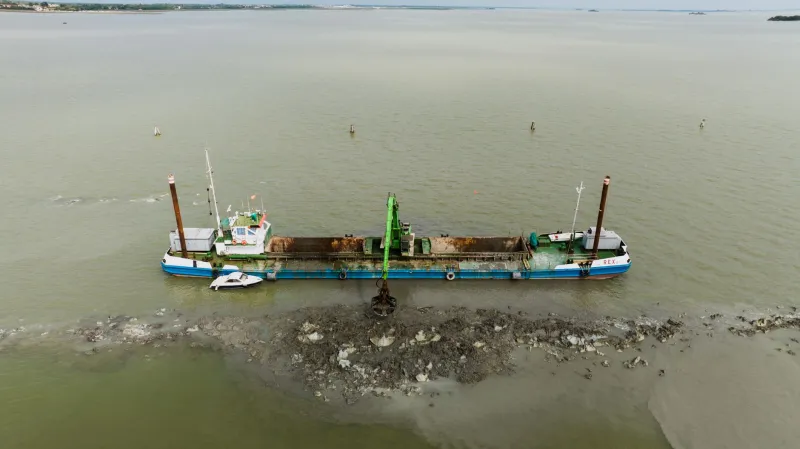
Marine sand and gravel has long been the quiet workhorse of British construction, commonly estimated to supply around a fifth of the country's aggregate needs. For most of its history it was treated as a volume business with a straightforward consenting path. That assumption is now under strain. Land-won reserves face longer, more contested planning routes, while marine protected areas and conservation objectives impose a discipline on dredging that did not exist a generation ago. The result is a class of permission that behaves less like a commodity quota and more like an infrastructure asset with a regulatory life of its own.
For business readers, the practical question is how to diligence such an asset without overpaying for tonnage that may never be won. The framework below is deliberately conservative. It treats the licence, the environment, the logistics and the market as four linked tests, any one of which can cap value.
Tenure is a stack, not a single document
A common error is to read the marine licence as though it were the whole permission. In practice a dredging operation sits beneath several layers. The Crown Estate owns the seabed and grants a lease or licence for extraction. The Marine Management Organisation issues the marine licence under the Marine and Coastal Access Act 2009, usually following a habitats assessment. Harbour authorities may add their own consents, and the relevant marine plan may set spatial expectations that influence how a site is worked.
Diligence should therefore map each layer, note its expiry and the assumptions behind any renewal, and check whether tonnage caps, phase boundaries or seasonal windows have been varied over time. A lease that runs for a further twelve years is of limited comfort if the marine licence expires in three and renewal is not assured. Buyers should also examine the compliance record: exceedances, monitoring returns and any enforcement correspondence are a more honest signal than a clean-looking consent pack.
The sediment plume is the operative risk
The environmental test is not a box-ticking exercise. Dredging mobilises fine sediment, and the resulting plume can affect benthic habitats, fish spawning grounds and designated features some distance from the extraction zone. Where a site overlaps or abuts a Special Area of Conservation, a Marine Conservation Zone or a Special Protection Area, the conservation objectives become the real boundary of the asset.
This matters for valuation in two ways. First, the headroom between permitted and environmentally tolerable extraction may be narrower than the licence suggests. Second, the compensatory measures attached to a consent — restoration, monitoring, or contributions to wider habitat work — carry a cost that belongs in the operating model, not in a footnote. Highly Protected Marine Areas, designated since 2023, have sharpened the debate about where extraction is acceptable at all, and further spatial restrictions cannot be ruled out. A prudent buyer should ask how old the plume modelling is, whether baseline survey data predates significant changes in the receiving environment, and how the operator has responded to monitoring conditions in practice.
Vessels, wharves and the weather
Marine aggregate economics turn on logistics in a way that land-based quarries do not. The fleet may be owned or chartered, and charter rates, fuel and crewing all move. Wharf capacity is often the binding constraint: a licence with generous tonnage is worth little without discharge berths that can handle the vessel class and the delivery schedule. Tide windows and weather downtime reduce effective operating days, and the difference between a theoretical and an achieved output figure is frequently the largest single adjustment in a financial model.
Diligence should test the vessel-to-wharf fit, the tenure of any wharf leases, and the exposure to port congestion. It should also check how the operation is linked to coastal defence schemes, which can provide steadier demand than general construction but bring their own procurement timetables and public-sector payment terms.
End markets are narrower than they appear
Marine aggregate is chiefly a feed for ready-mix concrete and, to a lesser degree, for coastal protection and fill. That makes the asset sensitive to the housing and infrastructure cycle in London and the South East, where most marine material lands. Competition comes from land-won quarries, recycled aggregate and imports, and the aggregate levy shapes relative pricing. A buyer should model a market mix rather than a single demand line, and should distinguish contracted volumes from spot sales. Coastal defence work is often cited as a hedge, but it is lumpy and subject to its own funding cycles.
Five tests before the term sheet
One: completeness of the consent stack. Confirm every layer of permission, its term, its conditions and the realistic prospect of renewal.
Two: environmental headroom. Stress-test permitted tonnage against conservation objectives and the cost of monitoring and compensation.
Three: logistics capacity. Verify vessel access, wharf tenure and achievable operating days, not nameplate output.
Four: market mix and contract tenor. Separate contracted from spot demand, and test sensitivity to construction cycles and levy changes.
Five: regulatory trajectory and stakeholder position. Review marine plan direction, the local consultation record and the operator's standing with regulators and coastal communities.
Conclusion
Marine aggregate permissions are becoming a distinct asset class precisely because they are harder to obtain and harder to hold. That scarcity supports value, but only where the tenure is durable, the environmental headroom is real, and the logistics chain can deliver the tonnage the model assumes. In 2026, the seabed balance sheet rewards buyers who read the consent stack and the plume model as carefully as they read the cash flow.