From Spoil Heap to Specification: Certifying UK Quarry Overburden as a Saleable Aggregate

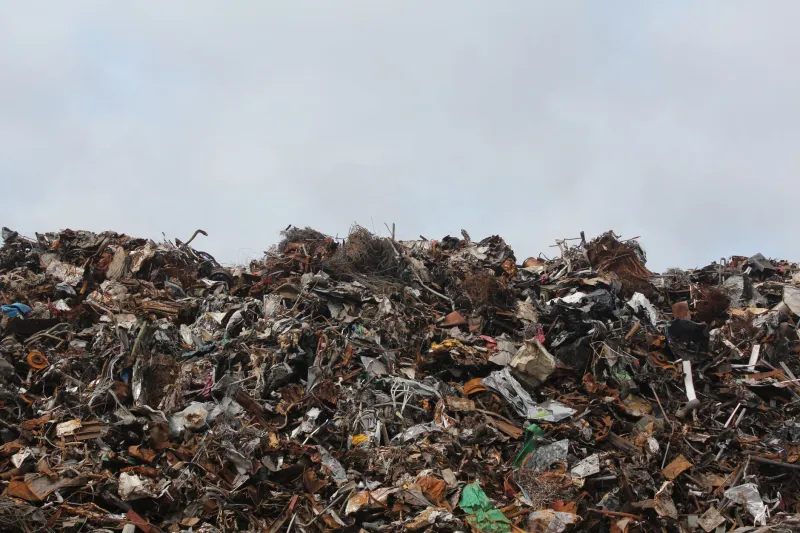
Photo by Photo by Luke Baard on Unsplash on Unsplash
Quarry overburden is rarely short of volume. It is short of status. For many UK operators, waste rock and spoil are treated as a long-term restoration asset or a costly disposal problem, with the commercial value buried under regulatory uncertainty and technical caution. That position is becoming harder to defend as aggregate demand, landfill costs and carbon accounting all push in the same direction: define the material properly, test it against a real specification, and sell it where the logistics work.
The opportunity is not a licence to rebrand every spoil heap as product. It is a disciplined by-product route, in which a defined mineral stream is assessed, permitted and certified for a known construction market. The distinction matters. A quarry that cannot demonstrate consistent quality, regulatory standing and customer acceptance is simply moving risk from the tip to the sales ledger.
Start with the material, not the market
The first mistake is to begin with a buyer. A more reliable sequence begins with the geology and the stockpile record. Operators should map overburden by lithology, weathering state and likely contamination, then sample across the volume rather than from the most accessible face. Variability is the central commercial risk: a single set of favourable tests from one stockpile tells a buyer very little about the next thousand tonnes.
A useful assessment covers particle size distribution after realistic processing, clay content, organic matter, sulphate and chloride levels, pH, soundness and frost resistance. For concrete or drainage applications, alkali-silica reactivity and fines content may also need attention. The point is not to test for every conceivable parameter, but to identify the few that could disqualify the material from the intended use and to establish how often they vary.
Stockpile age and handling also matter. Material that has been blended with soils, construction waste or runoff sediment is no longer a clean mineral stream. Separation at source is cheaper than reclassification later.
The regulatory question: waste or product?
In England, the Environment Agency’s by-products position and the retained waste framework provide the reference points. A material can be regarded as a by-product rather than waste where it is produced as an integral part of a process, is certain to be used, meets the relevant specification and does not lead to wider environmental harm. That is a regulatory test, not a marketing description. Operators should expect to evidence the production process, intended use, storage arrangements and quality controls.
Where the by-product route is not available, an end-of-waste application may be more appropriate. This requires a defined waste stream, a clear market, a specification and a conformity assessment regime. It is not a quick administrative step, and it is rarely sensible to pursue it without a customer willing to sign up to the resulting quality regime.
Permitting follows the regulatory route. An environmental permit may be needed for storage, treatment or sale, and the relevant regulator will look at drainage, dust, noise and the distinction between waste operations and mineral production. Operators in Wales, Scotland and Northern Ireland face equivalent but distinct regimes, so a group-wide template should not be assumed to travel without adjustment.
Specification is the commercial gate
The construction market does not buy “waste rock”. It buys material that meets a named specification. For aggregate applications, BS EN 13242 for unbound and hydraulically bound materials, BS EN 12620 for concrete aggregates and the Manual of Contract Documents for Highway Works, particularly Series 600 and 800, are the common reference points. Local authority specifications and National Highways requirements may add further tests or restrict source materials.
Customer acceptance is often the slowest step. A buyer will want trial batches, stockpile photographs, test certificates and a clear route for non-conformance. Some will require a factory production control system or a quality plan before they will take regular volumes. That is not unreasonable. A certified by-product competes with primary aggregate on consistency as much as on price.
The practical answer is to build a small quality dossier before approaching buyers: a material safety data sheet, a waste classification opinion, a sampling plan, a set of representative test results and a draft specification statement. This does not guarantee acceptance, but it shortens the conversation.
The margin case
The commercial logic rests on avoided cost and captured value. Disposal to landfill or permanent stockpiling carries landfill tax, haulage, handling and long-term restoration liabilities. Processing overburden into saleable aggregate carries crushing, screening, testing, storage and certification costs. The margin is the difference between those two paths, adjusted for the discount a buyer will expect against primary material.
That discount can be substantial. By-product aggregate is often sold at a lower price than quarried primary aggregate, and the operator may also forgo the aggregate levy treatment available to primary sources. The case is strongest where the material is close to demand, where processing can use existing plant, and where the specification is modest enough to tolerate natural variability. It is weakest where the material needs extensive washing, where contamination is widespread, or where the nearest buyer is a long haul away.
A simple sensitivity table is more useful than a single headline figure. Vary the proportion of overburden that meets specification, the processing yield, the discount to primary aggregate and the haulage distance. In many quarries the result is a narrow band of viable product rather than a whole-site transformation.
Making it bankable
Certification turns a material into an asset only when it is repeatable. That means a documented sampling regime, retained test certificates, stockpile reconciliation and a named person accountable for conformity. It also means being honest about the volumes that will not make the grade. A by-product business that cannot quarantine non-conforming material will eventually damage both its margin and its permit standing.
For 2026, the strongest cases are likely to be modest and local: a bounded overburden stream, a defined specification, a customer within economic haulage distance and a regulator satisfied that the material is genuinely a product. That is less exciting than the phrase “waste to wealth”, but it is more likely to survive scrutiny. The spoil heap is not a gold mine. It is a stockpile with a specification problem, and the operators who solve that problem properly will capture the margin.