The Guarantee Is the Risk: Restoration Security in a Harder UK Quarry Market

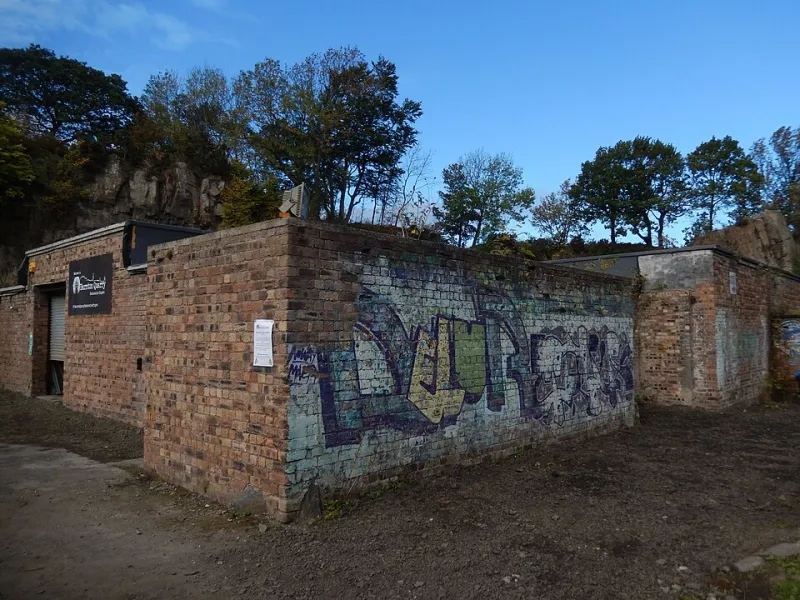
Photo: AlasdairW, CC BY-SA 3.0, via Wikimedia Commons
Restoration security has long been treated as a closing item on a mineral planning file: a bond, a legal agreement, a figure negotiated near the end of a long consent. That treatment is becoming harder to sustain. As more UK quarry operators face tighter margins, refinancing pressure and weaker aggregates demand in some sub-markets, mineral planning authorities are revisiting the assumptions behind financial assurance. The result is not a simple rise in bond premiums. It is a change in how consent risk is priced.
Why restoration security is back on the agenda
Mineral planning authorities carry a contingent liability that rarely appears on their balance sheets. If an operator fails before restoration is complete, the authority may be drawn into enforcement, temporary works or a search for a successor. The political and financial cost of that outcome is rising as local government budgets remain constrained and planning departments operate with thin specialist capacity.
For operators, the practical consequence is that restoration security is being scrutinised earlier and more deeply. Authorities are asking for clearer costings, more frequent reviews and stronger evidence that a guarantee will still be deliverable if the company, rather than the quarry, reaches the end of its life. In some cases, the debate is shifting from whether a bond is required to whether the proposed instrument is credible.
Bond sizing is a proxy for insolvency, not a cure
A restoration bond is often described as protection. It is better understood as a proxy. The size of the bond reflects an authority’s estimate of the cost of restoring a site to an agreed after-use, together with a margin for uncertainty and administration. It does not, by itself, remove the risk that the estimate is wrong, that the works are delayed, or that the guarantor is weaker than expected.
That distinction matters for boards. A consent that looks affordable on the basis of a headline bond figure may be less attractive once the review mechanics, indexation, cash-collateral terms and parent-company support are examined. A guarantor with a strong balance sheet today may not be the guarantor the authority is relying on in ten years. Mineral planning authorities are increasingly alive to that gap.
Local authority capacity shapes the timetable
Capacity is not a side issue. An authority with limited minerals and waste expertise may take longer to negotiate, review and discharge restoration conditions. That delay has a cost: it ties up capital, postpones release of security and can affect the timing of sales or after-use receipts. It also creates negotiating asymmetry. An operator with a large legal and technical team can overwhelm a smaller authority, but that advantage is temporary if the resulting agreement is poorly drafted or politically fragile.
The more durable approach is to treat the authority as a counterparty with legitimate concerns about long-tail liability. Early engagement on restoration costings, clear assumptions about after-use and a realistic review schedule can reduce the risk of a late-stage dispute. It can also improve the odds that a bond is accepted at a defensible level rather than inflated as a precaution against uncertainty.
Five stress tests for boards
Before signing a new aggregates or industrial-minerals scheme, directors should test the consent against scenarios that a conventional financial model may not capture.
-
Insolvency timing. What happens if the operator fails midway through extraction rather than at the end? Are there staged restoration obligations, and does the security match the works required at each stage?
-
Cost inflation. Are restoration costings indexed to labour, plant and earthworks? A fixed bond may look adequate at grant but erode over a long consent period.
-
Instrument quality. Is the guarantee cash-backed, insured, parent-supported or dependent on a third-party surety? Each has a different failure mode in a stressed market.
-
Authority capacity. Does the mineral planning authority have the resources to review and discharge conditions in a predictable sequence? If not, build that delay into the project timetable.
-
After-use optionality. Does the restoration plan create a credible after-use, or does it leave the authority with a liability that no one wants to own? A realistic after-use can reduce the perceived risk of the consent.
The real cost of consent
The restoration bond is not simply a cost of doing business. It is a signal of how the planning system views the operator’s long-term reliability. In a harder market, that signal becomes more valuable and more expensive. Boards that treat restoration security as a technical detail risk discovering, too late, that the guarantee they signed is the weakest part of the project.
The better course is to price restoration risk explicitly, negotiate it early and stress-test it alongside geology, permitting and offtake. For UK quarry operators, the consent is only as strong as the assurance behind it.